Monday, 2 July 2012

Phlegm and the Street


Occasionally my work at the gallery forces me to think and work outside my favourite box of contemporary and twentieth century artists. Recently the architect asked me to find a specific street artist for him – not, my box at all. Now I really am not a snob, and when he asked me sweetly over coffee several months ago my heart sank like a stone and I didn’t know whether to laugh or cry or discreetly become deaf and avoid the issue…My mind screamed the question: Street, ME?!? Whilst I found myself saying, “what a wonderful idea, I’d love to help…” After he beetled off to build another multi-million pound property, I drank my cappuccino in contemplative silence, wondering what exactly I’d let myself in for.

What I had done, it turns out, is open the door to a world of art I’d only really seen in passing, admired and by turn slandered as rubbish, and decided that it really isn’t as scary or achingly cool as I thought. The people I met and dealt with were charming artists who were passionate about their work and very unpretentious about the possibility that it was a transient addition to the urban landscape. The majority of artists I meet would throw an epic wobbly if something they’d worked so hard for was destroyed by anyone once they themselves had decided it was finished. In many ways it was a breath of fresh air for me to be surrounded by these guys.


In hindsight the whole operation was akin to a detective story. I had nothing but a picture and my wits and considerable brain to go on – oh yes, I really am that modest. That March morning I saw myself setting out on a journey of adventure and discovery which would take me to the darkest recesses of London, mixing with the seedy underbelly of artistic society. Thankfully I’m the kind of gal who gets stuck in to pretty much anything – particularly food – and whilst slightly nervous as to what I was going to find, I decided to take my reputation in my hands and dive straight in by calling my modern day Baker Street Runners. It took a while but we got there in the end, and as it turns out the seedy underbelly isn’t quite as uncouth as I had reared.


Now, when I started coming to the East End in the blisteringly un-wintery winter of 2010, I was struck by two things – firstly the people and secondly the street art. The first isn’t particularly pertinent to this discussion, but the second is fundamental – street art was everywhere! Being raised in a strictly canvas and paper art world, it was something of a revelation to me that some street art was beautiful. I was particularly struck by an image which I saw on the corner of Great Eastern Street. For a moment I was transported back through the years to my studies on the German reformation – urgh, what a waste of time that was – but way, way cooler… The thing that caught my eye initially was the style, the thing which evolved into a permanent love of the work was the subject; these images were full of wit, dark humour, humanity and curiosity, in short they were brilliant. I never dreamed in a month of Wednesday lunchtimes, that when I wandered by all that time ago that I’d be one day tracking down that same artist and working with him.


Phlegm. Phelgm… Good start with a name like that isn’t it? Well, interesting tag aside, he’s a street artist who lives and works in Sheffield and is fond of a reet good cuppa. Some may think the name was chosen  to be deliberately shocking, but as it turns out it was picked for its historical relevance to health. Phlegm's name derives from classical medicine, where the body was thought to have four main fluids (or humours), if you had too much phlegm in the system it was thought to lead to apathy. His artwork, particularly his comics (see below) were a release from the strict confines of the Fine Art Degree he took and allowed him to escape what he deemed the ‘stagnation’ of his post-degree work.


His artwork bridges a gap between what some people would call proper art and street art, it is intelligent, witty and provokes debate – what more do doubters about the place of street art in our cultural heritage want? For me the images are immediately striking; they aren’t like anything else out there. It’s like seeing a modern take on an ancient art form, bringing the past to present and doing it phenomenally well. I love it. I want it. I managed to get him to paint a wall in Old Street. I survived. I’m chuffed.  Enjoy them – I hope you like, but even if you don’t, I do!


Monday, 25 June 2012

Joan Eardley - Landscapes


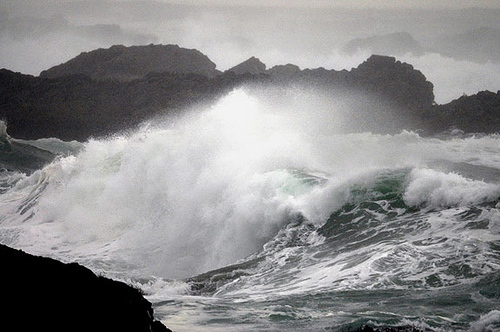
Picture the scene if you will: storm tossed seas pounding the shingle beach, spray hanging so thick in the air you could be in the middle of a blizzard, lightening piercing the maelstrom and wind howling demonically around your body, chilling you to the bone. A pleasant picture no? Even the thought of it is making me curl deeper into my cashmere… Brrr! 


Now I love a potter into the great outdoors as much as the next girl, in fact I really do enjoy tootling around amidst nature in all her storm whipped splendour, when the wind steals your breath before you can even draw it and being drenched is just par for the course. Even intrepid little me might quail slightly about getting so up close and personal to a storm on the beach though, especially when I was blatantly the tallest and most electrically conductive thing around… Luckily for us though, there are people who are so passionate about capturing the true nature of a storm that they’ll throw caution to the wind (pardon the pun) and just straight in. Joan Eardley was one of these adventurous souls and her Landscape works are a tribute to the combination of passion of a woman and the power of Nature.

The Wave, 1961. Oil and Grit on Board. Scottish National Gallery of Modern Art, Edinburgh.

Last December I was cast adrift in Eardley’s urban landscape of the Glasgow Gorbals, with her children and their poverty as my company. In the same afternoon I was swept away yet again, but this time it was to the wide and wild expanses of the Scottish country around Catterline to the south of Aberdeen. Now in my memory the whole span of that time is rather rose-tinted and gooey (read cringing for everyone else) so I was quite prepared to put my reaction to the work down to romantic fancy, but even now, some six months later I’m still enthralled by the combination of power and passion which characterise this Landscape work. It is just as strong as the Figurative but concentrates more on the fleeting nature of great untouched landscapes, rather than the transitory nature and impressions of the humanity Eardley surrounded herself with, and which some find it easier to associate with.

Summer Fields, c.1961. Oil and Grasses on Board. Scottish National Gallery of Modern Art.

Eardley always painted with an eye for detail. She had a talent for immersing herself in the world that she was capturing, and taking the viewer along with her, saturating us all in her style, her love of colour and her passion for what she saw. She also had a knack for capturing a moment in time to perfection – something which has only truly been recognised with the fifty or so years of hindsight we have accrued since her death. The urban and country landscapes that she immortalised represented a way of life which was slowly and irrevocably disappearing. If we look at her images painted in and around the tiny village of Catterline during the 1950’s and 60’s, they show a way of life no longer seen in the modern world. Whilst there are indications of humanity in the houses and fishing nets and beehives, there is nothing that suggests modernity and the encroachment of technological advancements. Indeed, whilst the world at that time was seemingly swept up by a storm of new freedom, consumerism and social bonhomie, Eardley was known to race north at the ring of a phone to capture a storm of the natural variety in all its uncaring, inhuman and timeless glory. She knew her landscapes were slowly disappearing around her, she took it upon herself to capture every subtlety in colour throughout the season, every grade of the light along the shore, safe in the knowledge that it was but a fleeting second to be cherished.

Beehives, Approaching Storm, c.1950's. Oil on Board. By Kind Permission of the Royal Bank of Scotland, Edinburgh.

There are those who would contest that the Landscape images are nowhere near as alive as those of the Glasgow street children, I personally would argue that they are just as full of vim and vigour, just wholly more understated in the execution. The best (and most modern) comparison I can make would be to liken R&B to Soul music – they come from the same place in the music culture, it is just the way in which we interpret them and which moves us the most that determines our favourite. Indeed, I can honestly say that the Landscapes are my personal favourites because there is just so much going on within each composition in terms of subject and the way in which each has been lovingly constructed. There is something of the American and European post-war abstract scene echoing through the works Eardley produced during the mid-late 1950’s. It is in her physical interaction with her medium and in her experimentation with adding grass and flowers to her canvas to build texture and bring a greater sense of place to the images which I particularly enjoy. She has spread paint on with a palette knife in some instances, drawn into the wet paint with her brush end and dribbled wet pain down her foregrounds.

Foam and Blue Sky, 1962. Oil on Board. Collection of Henry and Sula Walton.
Whilst Eardley was certainly aware of the work of Kandinsky, Hartung and Soutine, I firmly believe that her work is sufficiently her own to say that she admire, but never felt the need to mimic, them.

There is an eloquence to every image in Eardley’s landscape portfolio which even the most verbose and flowery travel writer would struggle to replicate in describing the magnificent wastes, epic skies and the transition of the light in the coastal village which Eardley came to see as her second home. I find it staggering that I can smell the grasses, hear the crunch of fresh snow under foot and almost taste the salty tang in the air. After her untimely death at the age of just forty-two, one of Eardley’s tutors from her days at Glasgow School of Art, Hugh Adam Crawford, spoke movingly of her great artistic talent, and made what I consider to be a very telling remark about this woman and her work. Paraphrasing (as is my want) he intimated that she communicated with paint, she knew it’s language and what it could convey to a viewer and most importantly she knew how to do it. Eardley had few close friends, and she was known to be difficult and almost cold to those who she didn’t know. Give her a paint brush though and the feelings flow freely – love, loss, happiness, naivety, sadness… Life immemorial is Eardley’s beautifully painted gift to us all, more articulate and honest than words ever could be.

Catterline in Winter, c.1963. Oil on Board. Scottish National Gallery of Modern  Art, Edinburgh.

Friday, 15 June 2012

Joan Eardley - Glasgow Street Children


It’s funny the things we remember. For example, I remember being dressed in a cross-country biking helmet, oven gloves and some kind of jacket, then deposited in a pram to be backstop in a Christmas Day game of Cricket when I was in three years old (I should say that we were in New Zealand and strange things like that happen all the time…). I desperately wanted to play, but was judged to be too small and pathetic, so was swathed in ‘protective’ clothing and promptly had a ball hurled at me for several hours - I love my family.

Ah, the game of gentlemen... Or overly enthusiastic children

More pertinent to this thread however, is recalling the day I found Joan Eardley. It was the 27th of December and I was on my way – via a night in London – to France for New Year. The weather was about as un-Christmas like as could be, namely grey and mild. I was staying with the Architect for the night before flying off for what I hoped would be a relaxing five day break – think Chalet, open fires, snow, good company and way too much alcohol…

A skiing holiday for a non-skier... Picture perfect and totally debauched

Now, for some reason it all gets a little Breakfast at Tiffany’s from here on in, but I’m a sentimental old bird and as such am easily (please!) forgiven for such flights of fancy. High above Old Street, I settled myself on an enormous bed with the fluffiest duvet and pillows known to man and a cup of tea and, quite frankly, lost myself to another world and time. The lowering skies and glassy towers of London slowly disappeared, just as dusk gently wipes away the colour from daylight. The streets below ceased to hum with the life I knew, and were replaced by the hitherto unknown places of Joan Eardley’s Scotland.

A typical example of the Gorbals - bleak, cold, desolate and brimming with inspiration...

This wonderful and utterly unique artist is best known for her depictions of the streets of Glasgow during the 1950’s and 60’s. In coming to know her work, I am deeply conflicted in my feelings towards the images; they are at the same time familiar and alien. I can picture myself there and yet I have absolutely no idea of what that life could be like, except I somehow can instinctively feel the chill wind, the thinness of clothing, the security and warmth of having my brothers and sisters surrounding me... This in essence is why Eardley is brilliant – she’s opens one’s eyes to a new world and makes it as much your home as her subject’s. They always say that if you want to know a man you should walk a mile in his shoes, and that, in pictorial form, is what Eardley has created through her body of Glasgow work.

Children in a Glasgow Back Street, 1959. Oil on Canvas. Private Collection.

Any image you can find of Glasgow, and especially the Gorbals, back in the 1950’s is about as bleak as you can get without losing all historical credibility, and yet it was this impoverished and seemingly hopeless environment which Eardley breathed love and warmth and humanity into. Much like one of her heroes Stanley Spencer did, she became a part of the society which she was to capture with her materials over the 20 years of her painterly career. Although their background were poles apart, Eardley felt a kinship with the people of Glasgow, and drew from them the uniting factors of family, friendship and vivacity which make her work accessible to viewers from all walks of life, placing us squarely into her world.

Some of the Samson Family, 1961. Oil on Canvas. Private Collection

Eardley’s gift though is making us, the viewers, do the equivalents of a double take – we look at the image, and then we begin to see the true picture. It is true that the images of her Glasgow children are beautifully constructed in often vivid colour and always with a sense of humour, but there is a darkness which cannot be glossed over. Derelict streets and hungry families still remain even when the sun shines, and whilst Eardley wanted to show that lightness, she was always aware of the cold and bleak nature of her surroundings. Aside from the surroundings in which her paintings are set, there is an extra facets to this shadowy alternate view – the lack of any kind of parental figure. The children are shown as wandering the streets alone or with their siblings; responsibility for the youngest thrust upon the eldest whilst they themselves are nothing but adolescents themselves. The compositions depicts the closeness of these relationships, the family unit at perhaps it most fractured but at its tightest all the same; the bonds between siblings keeping the children warm and safe in the desolation of the adult world. When adults are portrayed it is in a dark and almost dangerous environment of twilight and gritty realism. Her palette is markedly different and whilst the children are full of life and hope born from their nievity, the adults seem more weighed down by trouble and their individual demons.

Three Children at a Tenement Window, 1961. Gouache on Paper. The Eardley Family.

The Table, 1953. Oil on Canvas. The MacLeod Collection

The world Eardley was portraying was a finite one, and the creeping loss of it was something that she was keenly aware of. Her images of the children of the Gorbals have immortalised the place, the time and the characters that she surrounded herself with. Whilst the city may long ago have succumbed to modernisation, its history has been preserved through her work. She took the people to her heart, and over time they have reciprocated in kind. Perhaps the most glowing testament to this love of Eardley by the Scots was the number of people who attended the first major retrospective of her work following her untimely death – over 30,000 people attended in the first three weeks of the exhibition alone. It seems almost poignant that someone who dedicated her artistic life to painting a world which was disappearing was destined to do the same before her time. Those who knew her mourned her passing, and those who have come to know her do so still.

Glasgow Children, 1958. Oil on Canvas. Private Collection

Wednesday, 9 May 2012

Colour in Grey


There are certain places in the world which have the ability to transport even the most cynical of minds far from the cares of the world. On this journey there are many markers which draw stress and strain from you so that by the time you reach where ever it is your going the rest of the world seems a million miles away. For me, this begins on the drive over Rannoch Moor and down through Glen Coe, on a brilliant road which wends its way amidst some of the most barren, bleak and wholly stunning scenery that can be found on this little island that so many of us call home. I think my plus one though I was slightly dotty as I jabbered on, and on, about how glacial erosion was an amazing sculptor, and wasn’t it amazing to see the kind of landscapes most people believe only exist in CG films about Hobbits, and did he think that people would actually believe that a landscape could be the colours we were seeing if we took a picture and showed it to them…

Beautiful, ineffable, awe-inspiring...

Now I could go on, at great length (really great length) about this small part of the West Highlands and how it is just breathtaking, but this is an art blog, not a travel one. What I can do though is share a little something of our holiday via my favourite subject as I’m not the only person to be entranced by the quiet mossy glades, rushing pebble strewn rivers, immaculate and thunderous sunsets, mind-boggling mountain ranges or the bone white beaches of the islands. The Highlands have been captivating artists for years and they have created some of truly beautiful images in that time, images which would seem unrealistic in subject a palette if you hadn’t had chance to see it with your own eyes.

Alan Davie, Little Island Phantasy, No.2, 1998. Oil on Board

I have a theory that I can spot a Scottish artist at an art fair even if I don’t know anything about them – whilst I am generally that wonderful at my job, it is actually pretty easy – simply based on the colouration they use. Given that Scotland has a reputation for being grey and wet for eleven months of the year (I should add that this is a big, fat fib) the art produced by its artists tells a different story. I remember the first time I saw work by a Scottish painter, it was in a tiny gallery in Loch Aline (now turned into the most delicious restaurant) and the person in question was named Francis Boag. Time has slightly dulled the old brain matter in some respects about that holiday, but I firmly remember the vibrancy and colour on the paper – it seemed to light the whole gallery – and whenever I begin thinking about Scottish artists he jumps to the forefront.

A more traditional view of Scotland and admittedly not wholly inaccurate...

Now I’m not a fan of decorative art, just ask my +1 about my passionate diatribes on Vettriano , but Boag is a great place to stop on a whirlwind tour of Scottish art. Now I love a bit of colour; it makes a statement about who you are, what you believe, where you come from…  It is the same with art. Boag is a great example of the way in which so many Scottish artists have championed their nationality and country through colour – and not as unrealistically as you may think. Now I’m not suggesting for one moment that his work be taken literally, unless you were utterly obliterated on some of the local whisky (yummy), but it is surprising how much of it is accurate in terms of pigmentation if not 100% in relation to hue. To my way of thinking, Boag reminds all of us that art is both seen and felt – it is often the physical manifestation of feeling about a given place; a highly emotive response to visual stimulation. His Scotland is that of a man who loves the landscape, the place, the vistas and translates his emotions into works of beauty which reflect this.

Francis Boag, Cottages Skye.

I’ve always been a water baby – I could swim or sail all day and not get bored for a moment, and I think that for this reason it is the sea in all its ferocious and serene glory that captures my interest whenever I visit. It could also be something to do with the fact that we go right to the far west coast, but I prefer it’s something in my soul rather than something in the geographical locale which speaks to me… John Houston was a wonderful artist for capturing the Janus nature of the sea around his home country, immortalising one particular spot – Bass Rock – forever in numerous pieces. Whilst I am a huge fan of his oil work, it is his watercolours in their delicate washes and simple lines which capture the very essence of the Scottish coast. His contrasts of yellow against grey, purple against primrose, transport one to the shore as a storm sweeps through or to a quiet dawn above the silent swell.  A painting can find expression when even the most effusive of us fail, and Houston captures more in his washes than ever I could in trying to describe the scenes I have seen.

John Houston, Bass Rock and Evening Sky, 1974. Watercolour on Japanese Paper

One can’t mention the sea without discussing the fishing villages which cling tenaciously to the rock and are lashed by the worst weather the Atlantic can throw at them. I spent the best part of a day in Tobermory when up there last, just witnessing life go by. I watched the tide come in, heard the fishing boats creak against their moorings and sampled some of the best seafood I’ve ever had. I should add the caveat that being somewhat new to the whole Seafood thing I took my cue from my +1 who assured me it really was awesome… Anyway, there is a quality to a fishing town, village, lonely jetty, which is to my overly romantic nature, rather wonderful. The boats are like world-weary adventurers who just can’t quite give up the waves yet and the bustle is punctuated by the sound of the surf murmuring against the stone footing of the pier. The locals themselves are hard and weathered in comparison to the tourists who are soft and scurry for the cover of their warm beds as soon as the weather invariably turns and the ocean becomes savage. In some of the remoter outposts one gets a sense of the transient nature of humanity in the face of the vastness of the natural world; many of the villages are nothing more than shells where they have been overrun by that which they felt at one point masters of.

William Gillies, The Harbour,  1934. Oil on Canvas

Finally it is to the people of this country that I turn. There are some who are taciturn and silent, others who are effusive and welcoming – just as you would find anywhere – and it takes a special kind of artist to capture this essence of humanity. Joan Eardley is one of my favourite artists EVER, and I think I should share her with people (and I shall do next week), just as she shared the people around her with the world. There is a warmth and depth to her pieces (mostly of street children in the tenement communities of Glasgow) which reminds me of Goya at times in terms of the self-identification with the subject. There is despair and dereliction and humour and great love in these images; one gets a sense of the way in which these children are bound together, old before their time in some cases, and in others too young to be cast adrift in the world they are portrayed in. Through it all though there is an innate sense of pride at where they are being drawn and painted, there is seemingly no shame at their poverty. In fact, more often than not, the easy self-absorption of the subjects in this world, rather than that of the painter, comes across as pride in their surroundings and way of life. It reminds me very much of many of the people I have had the privilege to meet from this part of the world – we may not choose their surroundings ourselves, but they survive and flourish there, bringing warmth and humanity to even the bleakest of landscapes.

Joan Eardley, Some of the Samson Children, 1961. Oil on Canvas

It seems that people are so ready to write places off without getting to know them. The landscapes and peoples of Scotland are as vital, vibrant and beautiful as anywhere else I have travelled. It may not be everyone’s destination of choice, but I recon I could see some more of it and not get bored of it; especially a little spot on the South West side of Mull which would be just perfect for a small house for a couple of nutters to enjoy the sunsets...

Thursday, 19 April 2012

the heART of it: Love Not Glamour


My Great Uncle was a wise chap. I think once you attain a certain age these pearls of wisdom become much more palatable to the younger generation - they seem like good sense rather than just parental meddling… Not that mine have ever meddled, they’re more in the mould of mistakes are good and if it’s something really bad then rally around and tell everyone else to bugger off. Uncle Phil once told me that Love should not be glamorous. He left it at that. Helpful really until you get to a certain place and perspective in your life when it all becomes clear. If you haven’t got there, you will, if you have, how true is that?!

Everyone needs a eureka moment...

Now my epiphany on this only came this afternoon – at approximately fourteen minutes past two on the way home from the Bank. Luckily for all of us, the art world got there way before I did, and have been trying to get us to see this very fact for years. There are so many images by the great and the good of the artistic community on the simplicity and everday nature of real love, and it’s on these that I intend to witter in a contented manner for a little while. Grand gestures are all very well and good, but artists have been pointing out for years that it is in fact the simple things which fulfil us emotionally, an embrace, a glance, a touch, a smile. These small gestures of intimacy can sustain us much better for their personal nature than ever an extravagance can because at the end of the day any idiot can pay for a nice meal or a piece of jewellery, but it takes one who knows you to remember exactly how you like your tea in the morning or when to give you a hug when you don’t even realise that you really need one.

Mark Chagall, The Lovers. Mixed media

The first stop on this eclectic trip through the last century is once again the artist Marc Quinn, who it has to be said I like rather a lot – he’s gutsy, no afraid to push boundaries, but unlike so many artists out there who go for shock value he’s actually good enough to back up his vision. The Kiss is my favourite of his images because if it’s simplicity – I mean what could be more effortless: two people in an embrace which is passionate and meaningful to them? The total self-absorption of the figures is moving; the pleasure and happiness these two clearly derive from one another is inspirational. There is another subtler message here when you start to really look, and I am going to be fairly blunt about it, Love conquering disability. This piece is really read on two levels – the emotional and the visual. That said, the longer you look the less you see and the more you feel; here is the perfect vision of young love and hope made real by the subjects anchoring in the world of physical handicap.

Marc Quinn, The Kiss, 2002. Marble

Though his somewhat turbulent relationships would tend to suggest to the unknowing spectator that he didn’t know the meaning of the word, Sir Stanley Spencer managed to capture and convey the sacred nature of the quiet moments we find in Love. Whilst there are many beautiful images on the everyday comfort we find in long-standing relationships one of my favourites is a simple pencil drawing of his beloved first wife Hilda and a daughter patting a dog which Stanley himself holds on a lead. There are other paintings which I could talk about, other drawings as well, but for some reason there is something in this small depiction of the family unit which is just perfect. Perhaps it’s because of Hilda and Spencer’s background that I find it so touching - despite difficulties within the marriage, Hilda's was the key role in his emotional life, as much of his work showed. They corresponded regularly, and he continued writing to her even after their divorce in 1937 and her death in 1950. These letters could be over a hundred pages long. As he wrote, 'You still are to me the most revealing person of true essential joy I know.’ There is something simple yet totally fulfilled in the absorption and interaction of the two main characters, a warmth to the touch, a sense of belonging together and tranquillity. Love in Spencer’s world was both passionate and quiet, when he followed the glamour of it he was nearly ruined, but the simple side of it was his constant companion and solace for the rest of his life.

Sir Stanley Spencer, Family Group, 1939. Pencil on Paper

When I was little (which if you believe my +1 I still am) my father bought me a poem called Hugs. It hung on a beam by my bed for years and I can still recall the majority of it to this day. Now I happen to be a bit of a tactile person - and by bit I mean utterly, irretrievably touchy feely – and I love a good hug. There’s something about them which can be intensely personal for an act which is essentially everyday; it’s the emotion which you imbue them with which makes them important parts of relationships and a way to convey your Love for another person. Nan Goldin pays this simple embrace homage in her seminal work The Hug. From what I can see there is nothing big or impressive about what is shown here, except maybe the hair, but that is the beauty of it. A hug, to the right minded person, shuts out the world, erases stress, conveys emotion, cheers you up and occasionally makes your heart skip a beat.

Nan Goldin, The Hug, 1980. Photograph

Thus far I’ve babbled on about Love in a relationship (whether fleeting or long term), but what about Love between family or friends? Well here the same principle of simplicity applies. I have several close friends, and by close I mean really close - being an only child elevates them to pretty much family. Now, we’ve been through a lot together over the years and there is a bond there which is for all intents and purposes is what I recognise to be Love; it has grown stronger through adversity, pain, laugher and many different relationships but remain constant and comforting. 

Against the world, your friends will always stand beside you...

That is the other things which artists remind us of in talking about relationship and the feelings they evoke; Love can grow from the most unlikely situations. David Hockney painted We Two Boys Together Clinging in 1961 before homosexuality was decriminalized and as such allows us to read his piece in two ways. The first directly refers to what I was saying about Love between friends, as the title is taken from Walt Whitman’s poem of the same name and discusses the bonds between friends and how unshakable they are. The second is still about Love in adversity and comes directly from the socio-historic context of the time it was painted.  The two protagonists in this painting are seen exchanging a passionate embrace and kiss in front of a lavatory wall covered in graffiti. The painting’s child-like lines and bright pinks and blues lend the embracing figures a vivacity to match that of the poem, in spite of the otherwise dreary greys of the background, suggestive of passion in the midst of somewhat illicit circumstances. The childlike nature of it also lends something in terms of the naivety of Love and a belief (exactly like a child) that everything will be fine.

David Hockney, We Two Boys Together Clinging, 1961. Oil on Board

Love it would seem is as complex as we choose to make it. We can strive for the ideal, we can find ourselves immersed in the darker aspects of it or we can find happiness in the simple pleasures it bring to us. Art is there for whatever version of this emotion we decide we wish to see, and like Love itself, it shifts and changes, challenging our perceptions and comforting us by turn. It’s been kind of fascinating to see the differences in interpretation of this subject, and it’s interesting the conversations it has thrown up and controversies it has reignited between my nearest and dearest. For me, well it’s a private thing as all true matters of the heart are. That said I can safely say I’ll be following some sage advice from one who knew infinitely better than myself…

Monday, 16 April 2012

the heART of it: The World Without Disney


So we’ve seen classical portrayals of Love in the previous post – I must admit to going slightly gooey over the whole thing, much to my +1’s disgust which lead to far too much ribbing on his part – but what do we mean by Love in the modern sense? The classic imagery is all romance, chivalry and gratuitous nudity, but is there still some semblance of this ideology in contemporary pieces? 

Barnaby Furnas, Romeo and Juliet #4, 2011.  Water dispersed pigments, dye, colored pencil, seral transfer and acrylic on linen. Traditional subjects may remain in contemporary works, but there is definitely a  difference in the scenes depicted - less about falling in Love, more about the consequences of that somewhat simple act.
I think it’s fair to say attitudes have changed somewhat. It seems to me that declarations of Love are now shown through the giving of a spare key, the dividing of the sock drawer (the romance in this act is almost palpable), and splitting the bill over dinner. An old university argument which was discussed somewhat tipsily (understatement) between my group of friends, and I hasten to add it was both guys and girls, was whether Disney has given generation of women and men a totally distorted idea of what Love is. Does Love as I’d like to see it still have a place in the modern world or should it be confined to celluloid and digital space as a sentimental museum piece?

Roy Lichtenstein, Hopeless, 1963. Oil on Canvas. The juxtaposition of Pop colouration and  dark subject matter is something which Lichtenstein favoured again and again in his work.

As always I can only speak from experience. I was mulling this over the other morning whilst sipping a big mug of hot chocolate and watching the world slide by - it’s amazing the things that come to you when you’re being stood-up for a breakfast meeting with The Architect - and I came to the conclusion that what we want from Love has altered, just as what we want from our relationships has altered. I was reminded of something my fabulous and feisty friend Anna said over lunch a few months ago: we’re no longer looking for (in) dependence with our other respective other halves; we’re actually looking for co-dependence. Despite the sometimes overwhelming evidence to the contrary, Love is still here (how else would Richard Curtis make any money?) but it has become much subtler, much more equal and much more open.

Banksy, Hope. Aerosol paint. 

This well-rounded epiphany reached, I began to dwell (not surprisingly under the circumstances) on the negatives as well as the positives. Is this subtlety what modern artists crave for their representations of Love? Well, the reaction is pretty bi-polar: we have the good and, frankly, the ugly. In fact the reaction of some modern artists toward ‘Love’ is so extreme we end up discussing it as either an absence, or worse, a perversion of the term and all we hope it stands for.

Francis Bacon, Triptych May-June 1973, 1973. Oil on Canvas. This portrait about the death of George is beautiful in it's poignancy and tragedy. It shows the grief which Love brings and is a firm part of the newer more honest depictions of all sides of love in modern society.

The darker side of this somewhat schizophrenic personality has found outlets through a number of different artists over the past 60 years. Some notable modern painterly contributors include Tracey Emin, Katharina Fritsch, Jean Jacques Lebel and big-hitters like Freud and Bacon. Their images of Love in all its darkness and self-obsession are some of the most iconic ever produced; from Emin’s comments on rape, to Freud’s obsessive rapaciousness to Bacon’s emotional trauma at the loss of Love. They all have an important voice to add to discussions of contemporary portrayals of darker forms Love. I’m not the biggest fan of Emin – though one cannot fail to recognise her contribution to the art scene – and her work seems more to be about shock value than actual skill. That said, her work is undeniably painful and perfectly encapsulates this new found critique of human relationships which has blossomed in the wake of the sexual revolution and the more open nature of modern society.

Tracy Emin, More Nothingness, 2009. Ink on Paper

One of my favourite modern sculptors is Marc Quinn, whose early place in the art world was cemented due to his position in the YBA group back in the late 1980’s, and his work on relationships and pre-conceptions in society fits into both positive and negative discussion of the way in which Love is shown in art. For arguments sake I’m going to put this in the negatives, not because I have a problem with it, but simply due to public conceptions about relationships and showing issues which are slightly taboo. In his piece The Kiss Quinn depicts an embracing couple, and at cursory glance there is nothing new to this, but when one looks closer both man and woman are handicapped in some way. Even today, society shies away from acknowledging deformity, whether from birth or from amputation, and by and large this social group is invisible, particularly in art. To be confronted therefore with a life-size statue of two disabled people passionately embracing has been deemed by many narrow minded people as being grotesque and wrong. In doing this, the deformed character of society is shown clearly; judgmental, cruel, narrow minded, dismissive, violent. The image is overwhelmingly positive (and I’ll talk more about it next week) but it is what it shows of Love in our wider society is much darker and more destructive.


Marc Quinn, The Kiss, 2002. Marble
The need to depict Love in all its glorious agony, would therefore seem to be the preoccupation of modern artists. The chivalry and romance seems to have been absorbed by the desire to shock us to the core, to cleanse the artists themselves of grief and to make Love real rather than imagined. Now, I refuse to believe this is the case, and by refuse I mean I shall throw an epic wobbly and start ranting at anyone and everyone who will listen to me that this is simply not the case. Of course there is darkness, but happiness is not created in a vacuum; if it was it would have no greater meaning than a word and only a vague feeling of what it meant to be content. You cannot have love without grief, love without pain or love without heartbreak. It seems therefore dear readers, that the fact that there is a deluge of the dark proves that there is also an abundance of light around us…


Wednesday, 4 April 2012

the heART of it: Oldies But Goodies


Every generation likes to think it's the first to discover anything new. I swear that if there wasn’t a hell of a lot of past precedent some bright spark would claim they’d invented the wheel. When it comes to art, and shock value, many artists love the thought that they’re producing the most scandalous and radical work ever. It is important to remember though that what is now considered tame and classical and scholarly, was at one point deemed to be shocking and tawdry, especially when religion weighed ponderously into the debate to dole out a portion of judgement on what was acceptable.

Diego Velasquez, The Toilet of Venus (1647-51). Oil on Canvas. This image is first recorded in June 1651, and in order to avoid censure by the Spanish Inquisition it is presumed that the image was displayed in private. It is amazing to think how attitudes have change, but at the same time in so many places they have not altered at all...

Now I’m not about to claim that modern and contemporary work produced depicting Love is not outrageous and drastic, particularly considering that popular feeling toward sexuality and its depiction has shifted radically in the last fifty or so years. It is clear though, that the complexity and intensity of depicting Love has been something of a pre-occupation for the Art world for centuries. We can reach all the way back to the ancient civilizations of the world for the very first examples. Not quite such a modern concept after all…

Wall relief from the tomb of Seti I.

So, I could make this seriously Old School in outlook, but that would be somewhat dull in my opinion, so let’s jump forward a millennia or two. Aphrodite, or Venus if we’re going to be Roman about it, is one of the most iconic images when we start talking, writing or thinking about Love. Her form and her embodiment of Love and Beauty have captivated the great and the good of the last 500 years. From censure during the Spanish Inquisition with the likes of Velázquez, to intimate ideas of Love conquering all with Botticelli they were all utterly transported by ideas of Love.

Sandro Botticelli, Venus and Mars (1485)

One of my favourite images from this period is by Correggio and dates to roughly 1525. This is a veritable cornucopia of classical Love imagery: To my romantic and (frankly) sentimental nature there’s more here than just a beautifully constructed and executed image; I see elements of hope, family and tenderness. As Venus emerges from the darkened landscape into the light we are shown an image of how life can be, it is aspirational as well as inspirational – exactly as Love ought to be. For me, the particularly touching element is the interaction of Mercury and Cupid; their absorption, watched over by Venus, is so moving. Out of the dark, out of despair and out of the cold, Love has emerged bringing light and warmth and infinite possibilities for happiness. In the final analysis, what is Love if not hope?

Antonio Correggio, Venus with Mercury and Cupid (1525).  Oil on Canvas

Now I’m not going to lie about this – I never particularly liked Dante Gabriel Rossetti. I was forced, and I mean forced, to study his sister Christina at school and the thought still makes me shudder – someone needed to hold that woman down and feed her chocolate until she perked up… Age has bought a modicum of wisdom and perspective though, and I now make a conscious effort not to tar brother and sister with the same brush. Indeed it would be impossible to talk about time-honoured depictions of Love without bringing in the Pre-Raphaelites. I could jabber, as could a great many people, at length about the romanticized images of Love which are presented in the work of this group of men, but I believe my favourite image is a much more honest and infinitely less well-known piece which works perfectly with the idea of true Love rather than the ideal.

Dante Gabriel Rossetti, Beata Beatrix (1864-70). Oil on Canvas.  This is a much  more typical example of Rossetti's idealised portrayal of Love and the premature death of Beatrix. It is believed that this image is a memorial to Rossetti's wife Elizabeth, with the ghostly presence of himself on the right and Love on the left.

Found was a piece created by Rossetti which can be read in a number of different ways depending on your personal feelings. It remained unfinished at his death and is his only treatment of a contemporary subject in oil; he returned to it many times during his life, but much like the story it depicts remained unrequited, even to him. I find it a fascinating subject, because it deals with an aspect of Love which is nearly impossible to render accurately – that step into the unknown.  Pain is as much a part of Love as happiness; it is a necessary evil and divides the strong from the weak in how we deal with it. In this case, one can sympathise with the Drover who has just come across his lost love wandering the streets of London as a prostitute, the fear and uncertainty of the woman in how she should react, the hope for both of them if they can overcome their past mistakes which lead them to this place; the fear of their possible future together combines with the happiness of their possible future. In short, it is as complex as the emotion is depicts, it leaves one gasping for air, confused and enlightened in equal measure.

Dante Gabriel Rossetti, Found (unfinished). Oil on Canvas.

All of the depictions of Love which are detailed here are what I would term slightly old-fashioned. Now I personally love a little vintage in my life, so I don’t see that as a bad thing in any way. On the contrary, it is amazing the arrogance of youth that we feel we have nothing to learn from what has gone before, especially in matters of the heart. My only issue with tradition is that sometimes it holds us back – much like convention in that respect – and stops us pursuing the path we want. If science is right and there is no life after this, then we cannot take our emotions with us, they die here with us, and all we have left is the memory of our actions. I suggest each and every one of us makes them count. Luckily, the artists of today are not bound or hampered, and their depictions of love in the modern world are as eye-opening, and often inspiring, as those which have gone before.